
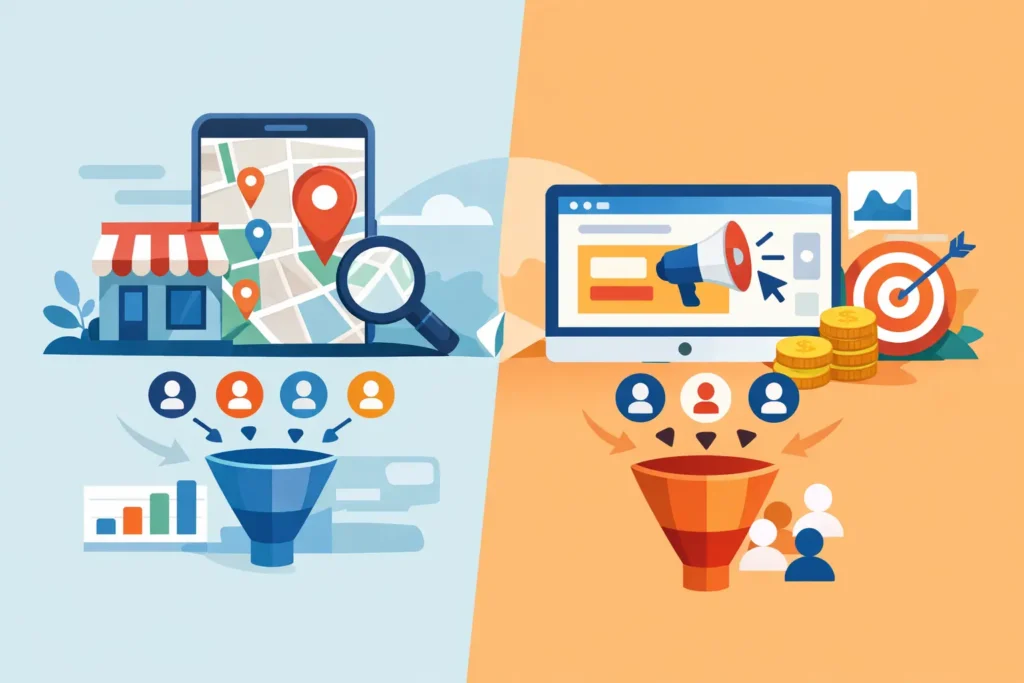
A roofing company can pay for a call this afternoon or build the Google Maps visibility that keeps generating calls months from now. That is the real decision behind local SEO vs Google Ads. Both can put your business in front of nearby customers searching for help, but they work on different timelines, cost structures, and levels of buyer intent.
For service businesses, this is not a debate about which channel is “better” in the abstract. It is about where your next qualified leads should come from, how quickly you need them, and whether your business has a local presence worth building into a long-term asset.
Local SEO vs Google Ads: The Core Difference
Local SEO earns visibility in the Google Map Pack, Google Maps, and organic search results. It is built through a well-optimized Google Business Profile, accurate business information, relevant service pages, reviews, local authority signals, technical SEO, and consistent activity. When someone searches “emergency plumber near me” or “HVAC repair in Dallas,” local SEO helps your business show up without paying for every click.
Google Ads buys immediate placement at the top of the search results. You select the services, locations, keywords, budget, and bid strategy. When a potential customer searches for a term you target, your ad can appear right away. You pay when someone clicks, whether that click becomes a booked job or not.
The difference is simple: Google Ads rents attention. Local SEO builds an owned source of visibility. A strong local strategy can keep producing calls after months of work, while an ad campaign stops producing leads as soon as the budget is paused.
That does not mean ads are a bad investment. It means you should use them with clear expectations.
When Google Ads Makes Sense
Google Ads is the faster option. If you just opened a location, entered a new service area, need more leads this month, or are dealing with a seasonal demand spike, paid search can create immediate visibility. A landscaping company may want aggressive ads before spring. A moving company may need leads before peak moving season. An HVAC company can use ads to capture urgent repair searches during a heat wave.
Paid search also gives you control. You can target specific ZIP codes, limit ads to business hours, prioritize high-margin services, and pause campaigns when your schedule is full. That level of control is valuable for operators who know exactly what a lead is worth.
Google Ads works especially well when the search is urgent and transactional. Searches such as “water heater repair near me,” “same-day junk removal,” or “24-hour electrician” often come from people ready to call now. If your landing page is focused, your phone is answered, and your campaign is managed tightly, those searches can turn into revenue quickly.
The catch is cost. Competitive service categories can have expensive clicks, particularly for legal services, roofing, plumbing, HVAC, and restoration. A campaign that generates traffic but lacks call tracking, negative keywords, location controls, and conversion-focused landing pages can burn through budget fast. More clicks do not automatically mean more profitable jobs.
Where Local SEO Produces Better Long-Term ROI
Local SEO is slower to build, but it has a stronger compounding effect. A properly managed Google Business Profile can help a business appear in Maps for the searches customers make every day. Strong local service pages can rank for city and service combinations. Positive reviews can improve trust before a prospect ever calls.
For most local service businesses, the Google Map Pack is high-value real estate. Searchers see the business name, rating, location, hours, photos, and phone number before they visit a website. If your profile stands out with consistent reviews, current photos, accurate categories, clear services, and regular posts, you have a better chance of earning the call.
Local SEO also improves lead quality in a different way. People who find you organically often see your ratings and profile details first. They may already understand what you offer and where you serve. That can reduce the number of low-intent calls compared with broad or poorly targeted ad traffic.
The trade-off is that local rankings are not instant. Google needs time and consistent signals to evaluate relevance, proximity, prominence, and trust. A business with an incomplete profile, few reviews, weak website content, and inconsistent business information should not expect to outrank established competitors in two weeks.
But once rankings improve, the economics change. You are no longer paying a fee for every individual click. That is why local SEO often becomes the better long-term lead-generation channel for businesses that plan to compete in the same market for years.
Cost, Speed, and Lead Quality Compared
Google Ads wins on speed. A well-built campaign can start generating calls shortly after launch. Local SEO usually requires several months of consistent work before meaningful movement, especially in competitive markets.
Local SEO wins on durability. Ads disappear when spending stops. Organic and Maps visibility can continue to generate leads, provided your profile, reviews, website, and local signals are maintained.
Cost depends on your market, but Google Ads has a direct and visible expense: ad spend plus campaign management. Local SEO is an ongoing investment in optimization and content, but it does not charge you per click. Over time, a business that ranks in Maps for multiple valuable searches may acquire leads at a lower effective cost than through paid search alone.
Lead quality depends on campaign setup and your operations. Ads can produce excellent leads when keywords, locations, schedules, and landing pages are tightly managed. Local SEO can produce high-trust leads when your reviews, business profile, and website make a strong first impression. Neither channel fixes a slow response time, missed calls, poor pricing, or a weak sales process.
The Best Strategy for Most Service Businesses
For established local businesses, the strongest approach is usually not choosing one channel forever. It is using Google Ads to capture immediate demand while local SEO builds the rankings that reduce reliance on paid traffic over time.
Start with the gap that is costing you the most. If your phone is quiet and you need booked work now, Google Ads may be the first move. Focus on a limited set of profitable services, tight service areas, clear call tracking, and a landing page built to convert. Do not spread a small budget across every service you offer.
If you are already spending heavily on ads every month but barely appear in Google Maps, local SEO deserves immediate attention. Your Google Business Profile should be fully optimized, your business information should be consistent, and your review process should be active. Your website should clearly support the services and locations you want to rank for.
For businesses with steady demand and long-term growth goals, treat Ads as the accelerator and local SEO as the foundation. Ads can keep opportunities moving while Maps rankings, local pages, review velocity, and technical improvements build a more dependable acquisition engine.
What a Strong Local SEO Foundation Looks Like
A Google Business Profile is not a set-it-and-forget-it listing. It needs active management. That means selecting the right primary and secondary categories, completing every relevant field, adding service details, uploading real jobsite photos, publishing regular updates, and responding to reviews professionally.
Your website has to support the listing. Google needs clear evidence that your company serves the areas and provides the services it claims to offer. Dedicated service pages, location-focused content where appropriate, clean site structure, fast mobile performance, and accurate contact information all help strengthen local relevance.
Reviews remain one of the most visible trust signals in local search. The goal is not to chase a one-time batch of reviews. Build a consistent process for requesting feedback after completed jobs. A steady flow of genuine reviews tells prospective customers that your business is active, credible, and worth calling.
This execution-heavy work is where many businesses lose ground. They launch a profile, add a few photos, and assume the job is done. Competitors that continue optimizing, posting, earning reviews, and improving their local website presence will usually pull ahead.
Choose Based on Your Business Goal
Choose Google Ads when you need fast demand, have a defined service area, know your lead value, and can answer calls quickly. It is ideal for urgent services, promotions, new locations, and seasonal pushes.
Choose local SEO when you want to improve Maps rankings, establish trust, lower dependency on paid clicks, and build a more durable source of inbound leads. It is essential for any local business that expects customers to search Google before choosing a provider.
If you can invest in both, do not run them as separate marketing silos. Use ad data to identify the services and search terms producing revenue. Use that information to guide your local content, Google Business Profile activity, and conversion improvements. At Spinlisting, that kind of coordinated execution is what turns local visibility into calls, estimates, and booked jobs.
The next customer searching for your service will choose from the businesses Google puts in front of them. Make sure you can compete for that search today, while building the visibility that keeps your pipeline working tomorrow.